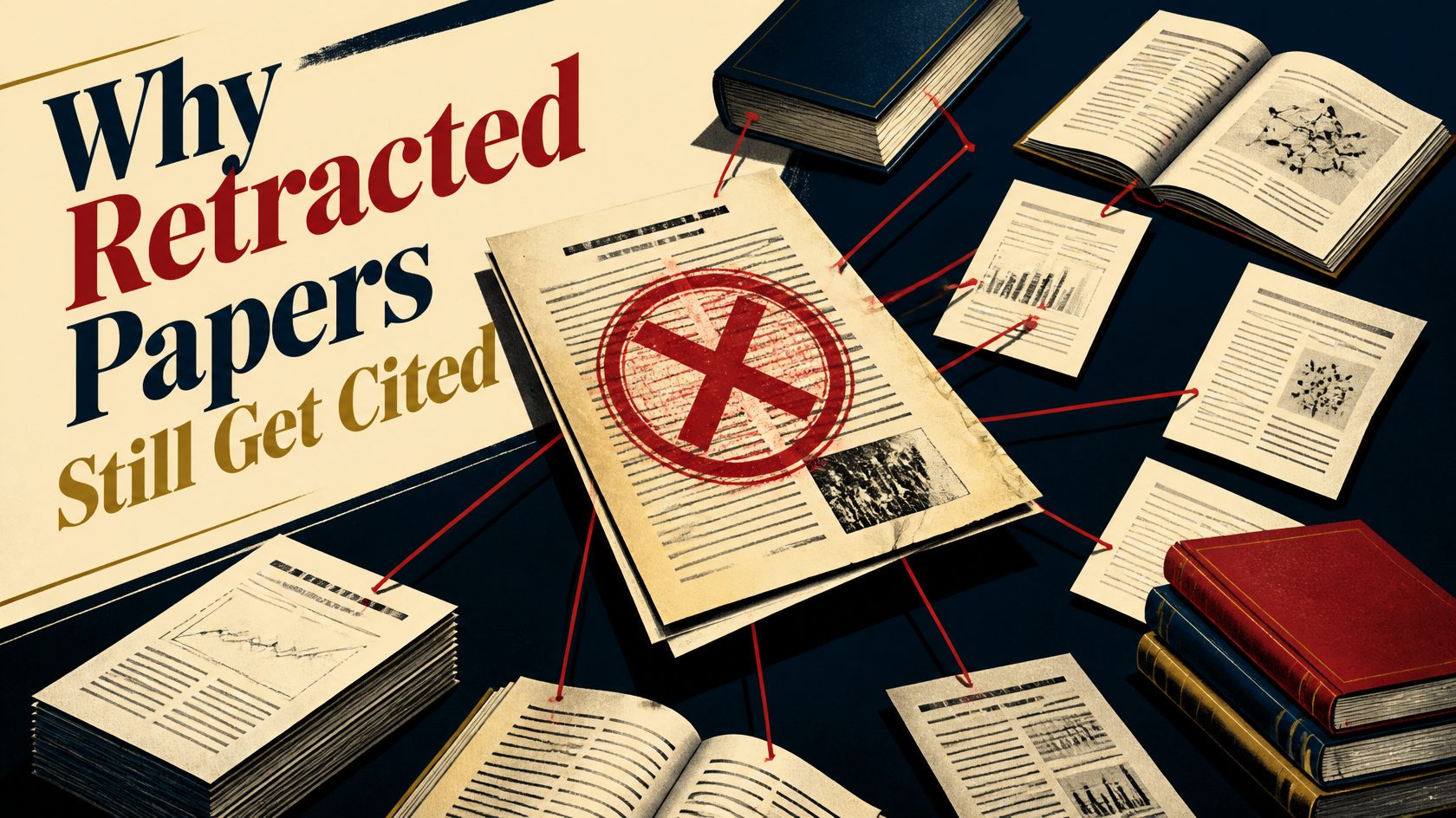
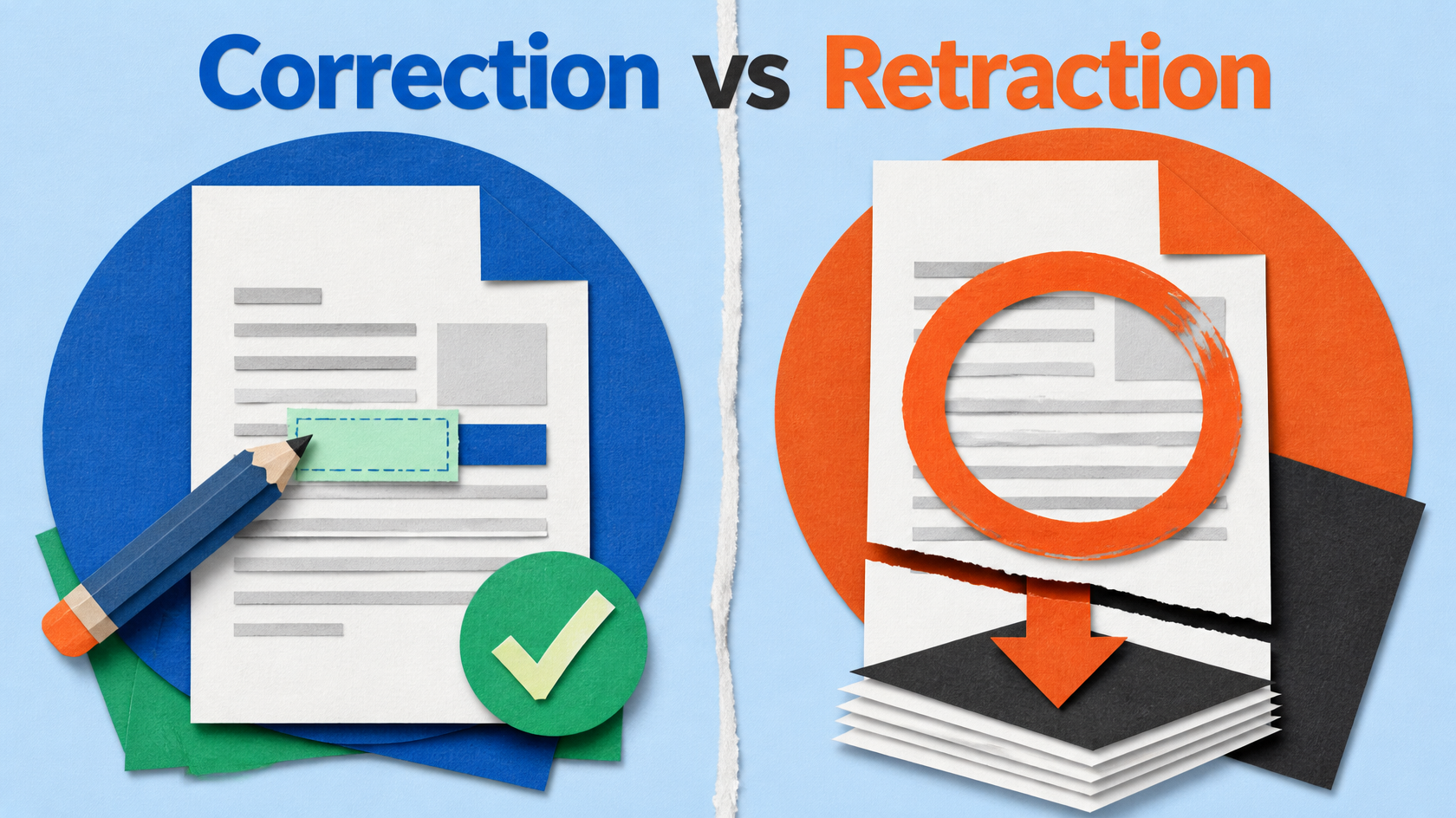
A retraction is supposed to be rare: a formal notice that a published paper should no longer be trusted. Yet in recent years, journals and publishers have begun retracting papers not just one at a time, but in batches of dozens, hundreds, or even thousands. These mass retractions have become one of the most striking signs of strain in scholarly publishing.
This article explains why mass retractions are rising, what drives them, which problems they reveal, whether rising numbers are good or bad news, and what researchers, publishers, and institutions are doing in response.
Table of Contents
What Is a Mass Retraction?
A retraction withdraws a published article from the scientific record because its findings are unreliable or it breached publication ethics. A mass retraction, sometimes called a batch retraction, happens when a journal or publisher retracts many papers at once, often after discovering a common problem such as manipulated peer review or papers produced by the same fraudulent source.
How Big Is the Trend?
Retraction numbers have risen sharply over the past two decades. According to recent reports:
- The Retraction Watch database passed 60,000 entries in 2025
- Retractions of health and basic life science articles have risen steadily since around 2005
- One publisher’s journals saw more than 11,000 retractions across 2023 and 2024 after paper mill content infiltrated special issues
- Paper mills accounted for roughly one in five health and life science retractions between 2016 and 2025, according to analysis reported in 2026
Even so, retractions still represent well under one percent of all published research each year. The concern is less about the total share and more about the speed of growth and the concentration of problems in certain journals, fields, and publishing models.
Main Drivers of Mass Retractions
| Driver | How It Leads to Mass Retractions |
|---|---|
| Paper mills | Large numbers of fake or low-quality papers sold to authors |
| Peer review manipulation | Fake reviewers or compromised editors approve many papers |
| Special issue abuse | Guest-edited issues used to push through unvetted work |
| Better detection tools | Software uncovers patterns across many papers at once |
| Publishing volume | More papers strain editors and reviewers |
| Generative AI | Makes it easier to produce fabricated text and images |
1. Paper Mills
Paper mills are commercial operations that produce fabricated or low-quality manuscripts and sell authorship slots to researchers who need publications. Reports suggest they expanded significantly in the early 2010s, fuelled by requirements in some systems that link promotions or degrees to publication counts. Because mills often reuse templates, images, and text, one discovery can expose many related papers.
2. Manipulated Peer Review
Some fraud schemes create fake reviewer accounts, suggest reviewers who are actually the authors or their associates, or rely on compromised guest editors. When journals discover that peer review was manipulated, they may retract every paper that went through the compromised process.
3. Special Issues at Scale
Special issues, often handled by guest editors, can publish large numbers of papers quickly. When guest editors are compromised or poorly supervised, entire special issues may be filled with problematic content. A widely reported case involved open-access special issues at one publisher, which led to thousands of retractions and the closure of several journals.
4. Better Detection
Part of the rise reflects improved detection. Experts often compare it to medical screening: finding more cases does not always mean the problem has suddenly grown; it may mean we are finally looking. Tools now include:
- Similarity-checking software for text
- Image analysis tools to spot duplicated or altered figures
- Screening for “tortured phrases,” awkward synonyms used to disguise copied text, such as “haphazard backwoods” for “random forests”
- Statistical analysis of citation patterns and reviewer behaviour
- Volunteer research integrity sleuths who examine published work
5. The Sheer Volume of Publishing
More than 1.5 million biomedical papers are added to PubMed each year, according to recent reporting. With so many submissions, editors and reviewers are stretched thin, making it easier for problematic papers to slip through.
6. Generative AI
AI tools can produce convincing text, fake data, and even manipulated images at speed. Integrity experts have warned that AI may act as an “accelerant,” making fraudulent content easier to produce and harder to detect.
The Root Cause: Incentives
Most experts agree that the deeper problem lies in research incentives. When hiring, promotion, funding, and even graduation depend heavily on publication counts and metrics, demand grows for quick publications, and fraudulent services emerge to meet it. This “publish or perish” pressure is widely seen as fuelling paper mills and other forms of misconduct.
Is Rising Retraction Good or Bad News?
The answer is both.
- Good news: rising retractions show that publishers, sleuths, and institutions are identifying and correcting problems
- Bad news: they reveal the scale of fraud and weaknesses in peer review and editorial oversight
Some experts also caution that many problematic papers remain unflagged. Without corrections, notes, or retractions, unreliable work can continue to be cited.
The Impact of Mass Retractions
- On science: retracted papers may already have been cited and used in reviews
- On honest authors: innocent researchers may share journals or special issues with fraudulent work
- On journals: reputational damage, loss of indexing, or closure
- On public trust: headlines about thousands of retractions can raise doubts about science overall
How the Publishing Community Is Responding
- United2Act: a collaborative initiative launched in 2023, coordinated with publication ethics and publishing organisations, to tackle paper mills through shared detection and standards
- Updated retraction guidance: organisations such as COPE have issued guidance addressing batch retractions and paper mill fraud
- Stronger screening: large publishers now routinely screen for image manipulation and suspicious submissions
- Reviewer identity checks: verifying that reviewers are real and independent
- Tighter control of special issues: stricter oversight of guest editors
- Indexing consequences: some databases remove journals linked to manipulation
Warning Signs of Problematic Papers
Editors and integrity sleuths often look for patterns such as:
- Unusual or nonsensical phrases replacing standard technical terms
- Identical images or graphs appearing in unrelated papers
- Citations that have little connection to the paper’s topic
- Very fast acceptance times in special issues
- Authors from unrelated fields publishing together without clear reason
- Email addresses or reviewer details that cannot be verified
No single sign proves misconduct, but several together may warrant closer review.
What Researchers Can Do
- Check whether papers you cite have been retracted or flagged
- Avoid services that promise guaranteed publication or sell authorship
- Be cautious of unsolicited invitations to special issues with unusually fast review
- Report suspected problems to editors or integrity offices
- Support reforms that value quality over quantity
Final Thoughts
Understanding why mass retractions are rising helps put the headlines in context. Paper mills, manipulated peer review, special issue abuse, publishing overload, and AI have all contributed, while better detection tools are bringing more problems to light. Addressing the underlying incentives, strengthening editorial oversight, and supporting transparent correction of the record will be key to restoring confidence in published research.