No research paper is perfect. Sometimes a published article contains a typing error in a table; sometimes its main conclusions turn out to be unreliable. Journals have different tools for fixing these problems, and two of the most important are corrections and retractions. Although both update the scientific record, they mean very different things.
This article on correction vs retraction explains what each one is, when it is used, other types of editorial notices, how the process works, what they mean for authors, and how readers should interpret them.
Table of Contents
Why Journals Update Published Articles
The scientific record should be as accurate as possible. When problems are found after publication, journals have a responsibility to inform readers. Updates help:
- Prevent other researchers from relying on wrong information
- Protect patients and the public when research affects health or policy
- Maintain trust in journals and research
- Give credit to authors who correct their own mistakes honestly
What Is a Correction?
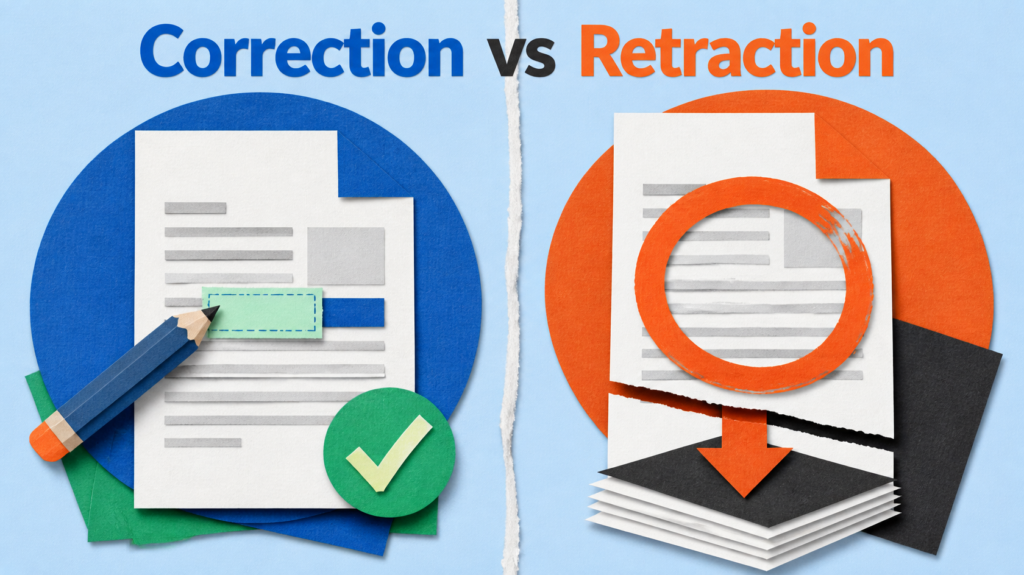
A correction fixes an error in a published article when the error does not undermine the main findings or conclusions. The article remains part of the scientific record, with a published notice explaining what was changed.
Common Reasons for Corrections
- Typing mistakes in numbers, names, or units
- Errors in a figure or table that do not change the conclusions
- Missing or incorrect author affiliations
- An omitted funding source or conflict of interest statement
- Incorrect references or labels
- Small calculation errors that do not affect the overall result
Erratum vs Corrigendum
Some journals use specific terms:
- Erratum: corrects an error introduced by the journal or publisher during production
- Corrigendum: corrects an error made by the authors
Many journals now simply use the word “correction” for both, which keeps notices simple and clear for readers who may not know the difference.
What Is a Retraction?
A retraction is a formal notice that a published article should no longer be considered reliable. The article usually stays online, clearly marked as retracted, along with a notice explaining why. This allows readers to understand what happened while preventing the work from being treated as valid.
Common Reasons for Retractions
- Major errors that invalidate the results or conclusions
- Data fabrication or falsification
- Plagiarism or duplicate publication
- Manipulated images
- Compromised or fake peer review
- Research conducted without required ethics approval
- Paper mill involvement or authorship fraud
Retractions are not always caused by misconduct. Honest researchers sometimes discover serious errors in their own work and request retraction themselves.
Correction vs Retraction at a Glance
| Feature | Correction | Retraction |
|---|---|---|
| Main purpose | Fix specific errors | Withdraw unreliable work |
| Effect on conclusions | Conclusions remain valid | Conclusions cannot be trusted |
| Status of article | Remains part of the record | Marked as retracted |
| Usual cause | Honest, minor mistakes | Serious error or misconduct |
| Impact on reputation | Usually minimal | Can be significant, depending on the reason |
Other Types of Editorial Notices
Expression of Concern
An expression of concern alerts readers to possible problems while an investigation is ongoing or when evidence is inconclusive. It may later be followed by a correction, retraction, or removal of the notice if concerns are resolved.
Partial Retraction
Some journals retract only a specific part of an article, such as one experiment, when the rest remains reliable. Many guidelines, however, recommend correction or full retraction instead, as partial retractions can be confusing.
Retraction and Replacement
When an honest error significantly changes results but the research is still valuable, some journals retract the original article and publish a corrected version, linking both clearly.
Removal
In rare cases, such as legal issues or serious privacy risks, an article may be removed entirely, with only a notice remaining.
How the Process Usually Works
- Problem identified: by authors, readers, reviewers, editors, or integrity sleuths
- Editor reviews the concern: assessing evidence and seriousness
- Authors are contacted: and asked to explain or provide data
- Institution may be involved: particularly when misconduct is suspected
- Decision made: correction, expression of concern, retraction, or no action
- Notice published: clearly linked to the original article
Many journals follow guidance from the Committee on Publication Ethics (COPE), which emphasises that retractions are meant to correct the literature rather than punish authors.
What Makes a Good Notice?
- Clearly identifies the original article
- Explains what was wrong and why action was taken
- States who requested the change, where appropriate
- Avoids vague language that leaves readers guessing
- Is freely accessible and linked from the original article
What Corrections and Retractions Mean for Authors
A correction is a normal part of research and usually has little effect on an author’s reputation. Promptly correcting errors shows honesty and care.
Retractions are more serious, but the reason matters. Retractions due to honest error, especially when authors report it themselves, are often viewed positively as responsible behaviour. Retractions for misconduct can lead to institutional investigations, funding consequences, and lasting damage to careers.
Self-Correction Is Encouraged
Researchers who discover mistakes in their published work should contact the journal quickly, explain the issue honestly, and propose an appropriate correction or retraction. Informing co-authors and keeping records of the original data and the error will make the process smoother and more transparent.
Simple Examples
- Correction: a table lists a patient’s age as 450 instead of 45. The typo is fixed, and the study’s conclusions are unchanged.
- Correction: the authors forgot to mention one source of funding. A notice adds the missing information.
- Expression of concern: readers notice similar images in two figures, and the journal alerts readers while the authors’ institution investigates.
- Retraction: a coding error in the analysis is discovered, and when corrected, the main result disappears. The authors request retraction.
- Retraction: an investigation finds that data were fabricated, and the journal retracts the article.
These examples show that the decision depends on how much the problem affects the reliability of the findings, not simply on how the error happened.
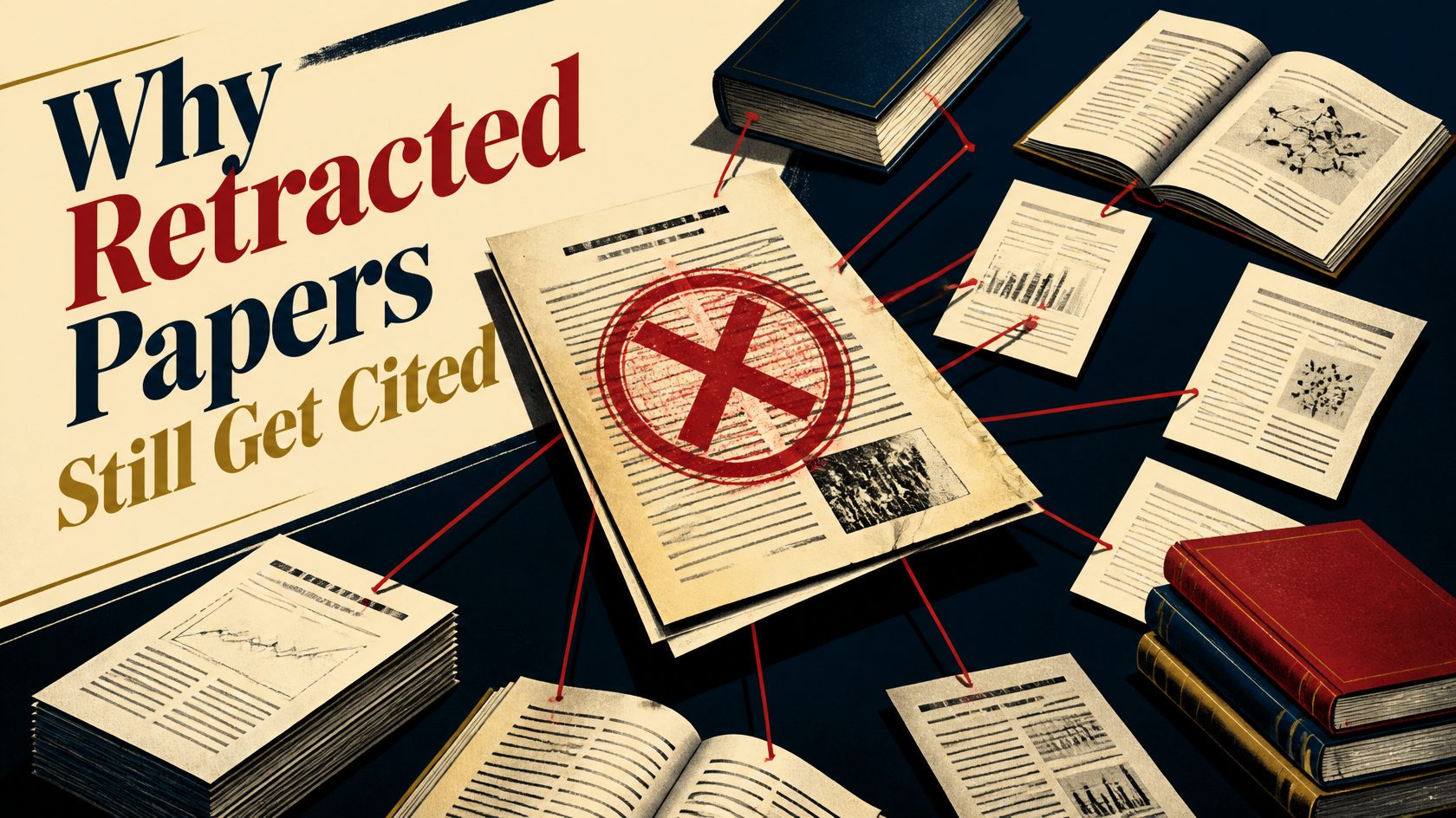
Why Retracted Papers Still Get Cited
Studies of the research literature have found that some retracted papers continue to be cited after retraction, sometimes without any mention of their status. This can happen because researchers use older downloaded copies, rely on secondary sources, or do not check retraction databases. Clear labelling on publisher websites, alerts in reference management software, and careful checking by authors help reduce this problem.
How Readers Should Interpret Notices
- A correction does not mean the study is invalid
- A retraction means the findings should not be relied on or cited as valid evidence
- An expression of concern means caution is warranted until questions are resolved
- Always read the notice to understand the reason
- Check reference managers and databases, which may flag retracted papers
Final Thoughts
Understanding correction vs retraction helps researchers and readers navigate the scientific record with confidence. Corrections fix specific errors while leaving conclusions intact, whereas retractions signal that a paper can no longer be trusted. Together with expressions of concern and other notices, they help keep research honest, transparent, and self-correcting.