When a journal editor suspects plagiarism, discovers manipulated images, or faces an authorship dispute, where do they turn for guidance? For thousands of journals and publishers worldwide, the answer is COPE, the Committee on Publication Ethics.
This article answers the question “What is COPE?” by explaining its history, purpose, membership, key guidance and resources, how it handles concerns, what it does not do, and why it matters for researchers, editors, and readers.
Table of Contents
What Is COPE?
COPE, the Committee on Publication Ethics, is a non-profit organisation that supports editors and publishers in maintaining high ethical standards in scholarly publishing. It provides guidance, education, and practical tools to help journals handle ethical issues fairly and consistently.
COPE is a membership organisation, not a regulator. It cannot force journals to take action, but its guidance is widely respected and followed across academic publishing.
COPE at a Glance
| Feature | Details |
|---|---|
| Founded | 1997, in the United Kingdom |
| Founders | A small group of medical journal editors |
| Status | Non-profit, governed by a board of trustees |
| Members | More than 13,000 journals, publishers, and organisations worldwide |
| Fields covered | All academic disciplines |
| Role | Guidance, education, and support, not regulation |
A Brief History
COPE was founded in 1997 by a small group of medical journal editors in the UK who wanted a place to discuss difficult ethical cases. What began as an informal forum grew into an international organisation.
- 1997: COPE is established
- 1999: Guidelines on Good Publication Practice are published
- 2004: The first Code of Conduct for Editors is released
- 2017: Core Practices are introduced, replacing the earlier code
- Recent years: new guidance on artificial intelligence, paper mills, and retractions
Today, COPE’s membership spans every field of research, from medicine and engineering to the humanities. Its members include large international publishers, university presses, scholarly societies, and small independent journals in many countries.
COPE’s Core Areas of Guidance
COPE’s Core Practices, introduced in 2017, set out key areas in which journals are expected to have clear policies:
- Allegations of misconduct
- Authorship and contributorship
- Complaints and appeals
- Conflicts of interest
- Data and reproducibility
- Ethical oversight
- Intellectual property
- Journal management
- Peer review processes
- Post-publication discussions and corrections
COPE has been working on updated guidance to reflect new challenges, so journals should check the latest documents on its official website.
Key COPE Resources
Flowcharts
COPE’s flowcharts are among its best-known tools. They provide step-by-step guidance for handling common problems, such as:
- Suspected plagiarism
- Duplicate or redundant publication
- Authorship disputes
- Undisclosed conflicts of interest
- Suspected image manipulation
- Reviewer misconduct
Flowcharts help editors respond fairly and consistently, ensuring authors have a chance to explain before decisions are made. They are designed as practical guides rather than strict rules, so editors can adapt them to each situation.
Retraction Guidelines
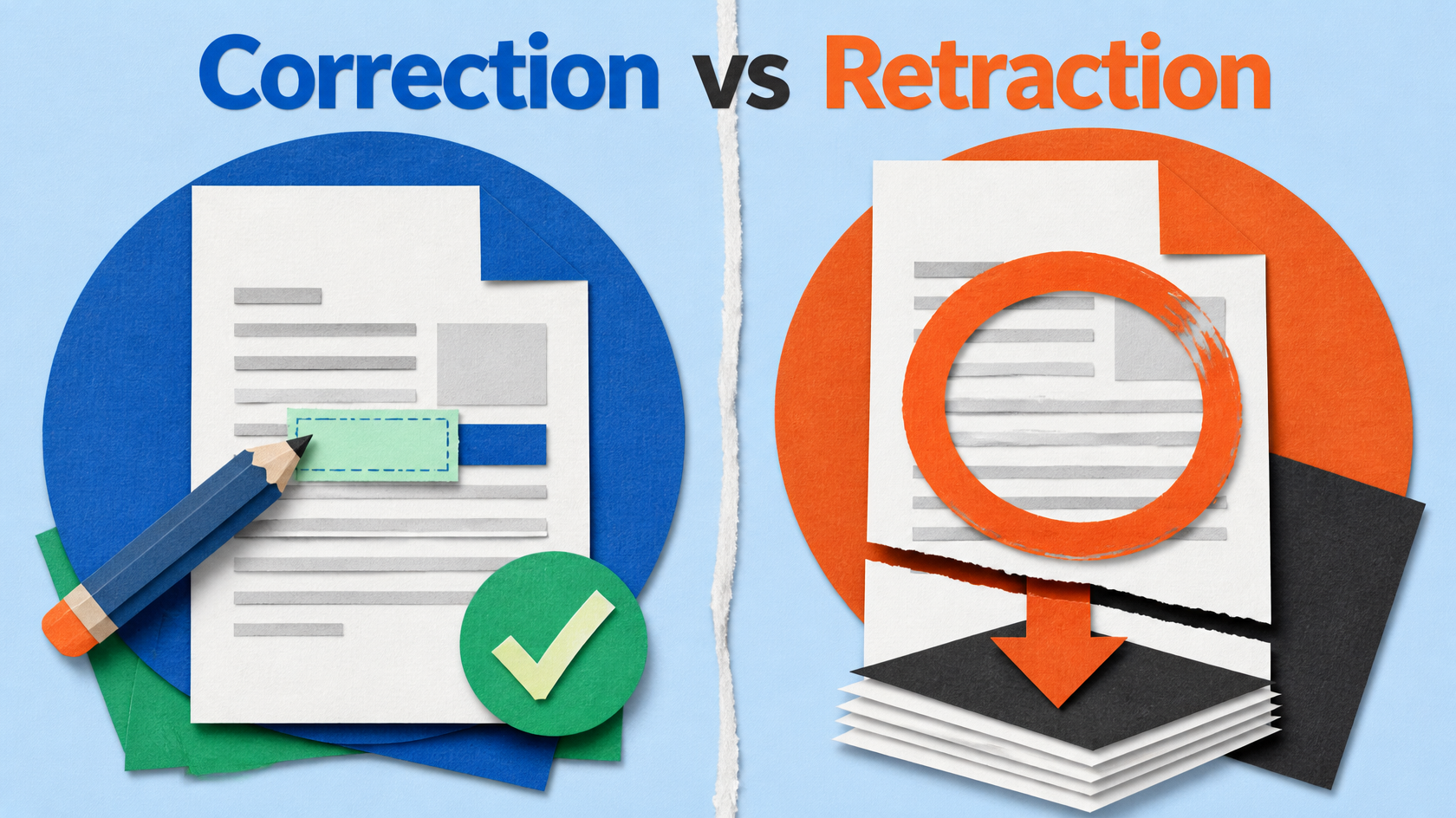
COPE’s retraction guidelines explain when articles should be retracted, corrected, or flagged with an expression of concern, and how retraction notices should be written. They emphasise that retractions are meant to correct the scientific record, not to punish authors.
The COPE Forum
Members can bring difficult, anonymised cases to the COPE Forum, where experienced editors discuss them and offer advice. COPE maintains a database of past cases that serves as a valuable learning resource.
Education and Training
COPE offers eLearning modules, webinars, seminars, and discussion documents covering topics such as peer review ethics, data integrity, and editorial independence.
Position Statements
COPE issues statements on emerging issues. For example, in 2023 it stated that AI tools cannot be listed as authors because they cannot take responsibility for the work, and that authors should disclose how they used AI.
COPE Guidance in Practice: An Example
Imagine a reader contacts a journal, pointing out that two figures in a published article look nearly identical, even though they are labelled as different experiments. Following COPE-style guidance, the editor would typically:
- Thank the reader and review the concern carefully
- Contact the authors, explain the issue, and ask for original data
- Assess the authors’ explanation, possibly with expert help
- Contact the authors’ institution if the explanation is unsatisfactory
- Decide on an outcome, such as a correction, expression of concern, or retraction
- Keep records of all communication and decisions
This structured approach protects both the integrity of the journal and the rights of the authors.
Who Can Join COPE?
COPE membership is open to journal editors, publishers, and other organisations involved in research publishing. Members typically:
- Agree to follow COPE’s principles and guidance
- Pay a membership fee based on their size or type
- Gain access to the Forum, member resources, and training
- Commit to cooperating if concerns are raised about their processes
Many of COPE’s guidance documents and flowcharts are freely available to everyone, including researchers and readers who are not members.
How COPE Handles Concerns About Members
If someone believes a COPE member journal has not followed good practice, they can raise a concern with COPE after first trying to resolve the issue with the journal. COPE’s role is to assess whether the journal followed appropriate processes, not to re-judge the research itself or overturn editorial decisions.
What COPE Does Not Do
- Investigate research misconduct directly
- Decide whether individual researchers are guilty
- Force journals to retract or accept papers
- Act as a legal authority
- Guarantee that every member journal is high quality
Investigations of misconduct are generally the responsibility of researchers’ institutions, while journals handle publication decisions.
Why COPE Matters
For Editors and Publishers
COPE provides practical, trusted guidance for complex situations, helping journals act fairly and consistently.
For Researchers
Authors benefit from transparent processes when concerns are raised about their work, including the opportunity to respond. Understanding COPE guidance also helps researchers avoid ethical pitfalls.
For Readers and Society
By promoting corrections, retractions, and ethical standards, COPE helps maintain trust in published research.
COPE and Current Challenges
COPE continues to respond to evolving threats to research integrity, including:
- Paper mills: businesses producing fake or low-quality papers for sale
- Artificial intelligence: questions about authorship, disclosure, and fabricated content
- Peer review manipulation: fake reviewer accounts and review rings
- Image manipulation: altered or duplicated figures
- Citation manipulation: artificially boosting citations
COPE collaborates with publishers, research integrity experts, and other organisations to address these issues.
Is COPE Membership a Sign of Quality?
COPE membership shows that a journal has committed to following ethical publishing standards. However, it is not a guarantee of quality, and some predatory journals falsely claim membership. Researchers can check COPE’s official member list to confirm a journal’s status and should consider other quality signals as well.
Final Thoughts
So, what is COPE? It is a global non-profit organisation that helps editors and publishers uphold ethical standards in research publishing. Through its Core Practices, flowcharts, retraction guidelines, forum, and education, COPE supports fair handling of problems such as plagiarism, authorship disputes, and misconduct. While it is not a regulator, its guidance plays a central role in protecting the integrity and trustworthiness of the scholarly record.