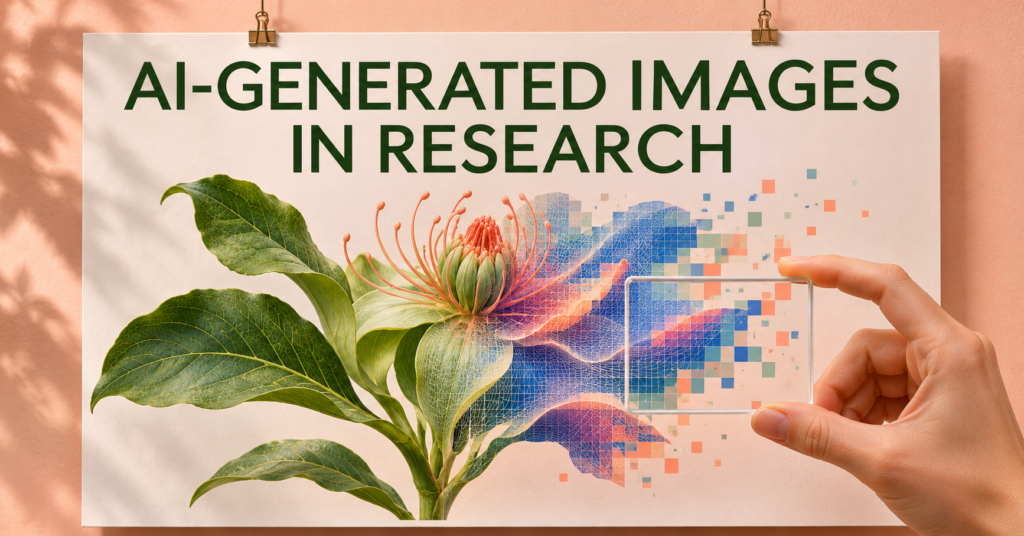
Images are central to many research papers. Microscope photos, gel blots, medical scans, diagrams, and graphs help readers see the evidence for themselves. Now, generative AI tools can create remarkably realistic images in seconds. This brings new possibilities for illustration and communication, but also serious risks to research integrity.
This article on AI-generated images in research explains how AI images are being used, why they raise concern, what journals allow, how fake images can be detected, and best practices for researchers.
Table of Contents
What Are AI-Generated Images?
AI-generated images are pictures created by machine learning models rather than captured by cameras, microscopes, or scientific instruments. Users typically describe what they want in a text prompt, and the AI produces an image. Some tools can also edit existing images, change details, or create entirely new scenes.
How AI Images Are Used in Research Communication
| Use | Example | Integrity Risk |
|---|---|---|
| Conceptual illustrations | Diagrams explaining a process | Low to moderate, if clearly labelled |
| Presentations and outreach | Images for talks or public articles | Moderate; may mislead if presented as real |
| Journal cover art | Artistic images for covers | Depends on journal policy and copyright |
| Research data images | Microscopy, gels, scans | High; presenting AI images as data is fabrication |
| AI as an analysis tool | Enhancing or analysing real images | Requires transparent methods and validation |
Why AI Images Raise Integrity Concerns
Fabricated Evidence
The biggest concern is that AI can produce realistic images that look like genuine experimental results. Presenting such images as data is fabrication, one of the most serious forms of research misconduct.
Harder to Detect
Traditional image manipulation often left clues, such as duplicated regions or editing artefacts. AI-generated images may be entirely new and unique, making them harder for editors and reviewers to identify.
Misleading Illustrations
Even when used as illustrations, AI images can contain scientific errors, such as incorrect anatomy or nonsensical labels. In one widely reported 2024 case, a journal article was retracted after it included an AI-generated illustration of a rat with anatomically impossible features and garbled labels, which had passed through peer review.
Paper Mills
Organisations that produce fake papers may use AI to generate images at scale, making fraudulent manuscripts appear more convincing.
Copyright and Ownership
Questions remain about who owns AI-generated images and whether training data included copyrighted material. In some jurisdictions, purely AI-generated images may not qualify for copyright protection.
What Journals and Publishers Allow
Policies vary, but many publishers have taken a cautious approach:
- Many journals prohibit AI-generated images that represent research data or results
- Some restrict generative AI images in figures altogether, with limited exceptions
- Where AI images are allowed, such as for illustration or cover art, clear labelling and disclosure are usually required
- Using AI as part of research methods, for example in image analysis, typically requires detailed description in the methods section
Researchers should always check the specific journal’s image and AI policies before submitting.
Acceptable vs Unacceptable Uses
Often Acceptable (with Disclosure and Policy Approval)
- Simple conceptual illustrations clearly labelled as AI-generated
- Images for presentations or outreach marked as illustrative
- AI tools used for transparent, validated image analysis of real data
Unacceptable
- Creating fake microscopy, blots, scans, or photographs presented as real results
- Using AI to alter real data images in misleading ways
- Adding AI-generated elements to experimental images without disclosure
- Using AI illustrations that misrepresent scientific facts
How Fake Images Are Detected
Detection methods are developing, including:
- Expert review: reviewers spotting unrealistic structures or patterns
- Image forensics software: tools that analyse image properties for signs of generation or manipulation
- Raw data requests: asking authors to provide original files from instruments
- Metadata checks: examining file information, though this can be altered
- Integrity sleuths: independent researchers who examine published images
- Content provenance standards: emerging systems that record how images were created
No method is perfect, which is why journals increasingly emphasise raw data availability and transparency.
AI Tools That Analyse Real Images
It is important to distinguish between AI that creates images and AI that helps analyse genuine data. Machine learning is widely used to count cells, segment medical scans, classify plant diseases, or detect features in satellite images. These uses can be valuable and legitimate, provided researchers:
- Describe the software, model, and settings in the methods
- Validate results against human assessment or known standards
- Share code and training details where possible
- Report limitations and error rates
Some AI tools can also “enhance” images by sharpening or filling in details. Because such tools may add features that were never captured, any enhancement used in research should be disclosed and treated with caution.
Why Raw Data Matters More Than Ever
As image generation becomes more realistic, the most reliable evidence is often the original, unprocessed data from instruments. Many journals now ask authors to keep or submit raw image files and full, uncropped versions of figures. Researchers who maintain organised archives of original images can respond quickly to questions and protect themselves from suspicion.
Teaching Students About Image Integrity
Early-career researchers may not realise that common editing practices can cross ethical lines. Training in acceptable image processing, record keeping, and AI policies helps students build good habits from the start.
Best Practices for Researchers
- Never use AI to create research data images or present AI images as real results
- Keep original raw images from instruments and cameras, unaltered
- Follow image processing guidelines: apply adjustments to whole images and describe them
- Label AI illustrations clearly and disclose the tool used
- Check scientific accuracy of any AI-generated diagram
- Read journal policies on AI and image integrity
- Describe AI analysis methods fully when AI is part of the research process
Questions to Ask Before Using an AI Image
- Does the journal or conference allow AI-generated images?
- Could a reader mistake this image for real data?
- Is the image scientifically accurate?
- Have I labelled it clearly and disclosed the tool used?
- Do I have the right to use and publish the image?
If any answer is uncertain, consider using a traditional illustration created by a designer or a simple diagram made by the authors instead. In most cases, clear, honest figures based on real data communicate science far more effectively than striking AI-generated visuals.
The Growing Challenge of Detection
As image generators improve, distinguishing real from synthetic images by eye will become harder. Journals are therefore focusing on prevention, such as requiring raw data, clear policies, and author declarations, rather than relying on detection alone. Researchers can support these efforts by keeping careful records and being transparent about every step of image creation and processing.
Final Thoughts
AI-generated images in research offer creative possibilities for illustration and communication, but they also create new risks of fabricated evidence and misleading figures. Most journals prohibit AI images that represent data and require clear disclosure for other uses. By keeping raw data, following image policies, labelling illustrations, and never presenting AI images as real results, researchers can use these tools responsibly and protect the trustworthiness of scientific images.